

In the 1970s, up until I was born, my dad managed a Pizza Hut franchise; he took the lowest-performing restaurant in a three-state area to first-place, and earned a real-world MBA in management practices along the way. A farm kid from the Red River Valley with a strong work ethic, he found a path to a good income and a real understanding of how franchised businesses work that he later built on to launch his own franchise business (ServiceMaster), which is where I learned the ins-and-outs of customer relationships, cash flow and debt management, and personnel management working alongside him as a kid through my college years and right up until going out to grad school in Oregon in my mid-twenties.
He told a lot of stories about his time running that restaurant - he credited those years plus taking a Dale Carnegie course with giving him tools for success in the business world - and I find myself going back to a lot of those stories to frame my own experiences in life and business still today.
One of those stories has been coming back up for me a lot lately, and it concerns another struggling restaurant he was asked to turn around. The central office noticed it was dropping in sales and costs were sky high. Given dad’s success with his own restaurant, they asked him to get this one back on track again.
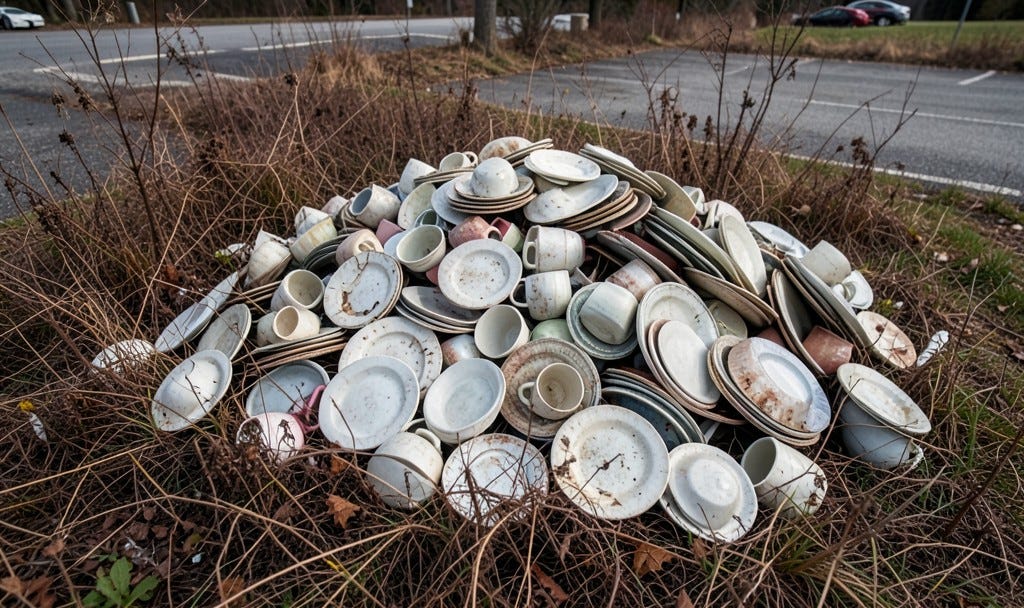
As he tells it, one of the first things catching his eye was the large number of boxes containing new dishes - all ordered from an HQ supply depot - stacked in the back of the restaurant. When he asked employees why they had so many unopened boxes of dishes, they told him “The dishwasher’s been broken for awhile now.” No one had bothered to tell the central office about this, or even taken a moment to check if a local company could fix an industrial dishwashing system - so they came up with a work-around.
That’s when they took him out back behind the restaurant and showed him their solution.
You guessed it - they were just throwing away all of the dishes and tableware every night, and since this quickly surpassed their dumpster’s capacity, they just started throwing them in a pile at the edge of the parking lot. When they ran out of dishes, they opened up boxes of new ones and then ordered more new dishes.
I’ve never been fully clear on exactly how dad resolved the situation - I do know that he let the central office know what was happening, and also that they would need to have a new direct manager onsite to reboot the restaurant, rather than just have him run a high-level efficiency tune-up.
This story has come up again for me lately as I’ve been triaging work situations where people have simply opted to “throw out the dishes” and keep on doing exactly the same things until someone calls them out on it, at which point they just shrug and say “I don’t know whose job it is the fix the dishwasher,” as if it’s a viable excuse for just breaking dishes.
But really, we all do know better. It may not be the actual dishes or dishwasher for each of us on a daily basis, but we all have something that we’re doing, putting up with, or otherwise enduring that we know isn’t serving us, and likely only delaying a difficult reckoning of some sort.
Take a minute to acknowledge whatever that thing is for you - acknowledge that it just has to be tackled, one way or the other - and take the first step.
Don’t overthink it, don’t start worrying about the fourth or fifth step - I recommend reading David Whyte’s “Start Close In”, and find your way from there. You’ll be glad you did.
Now if you’ll excuse me, I’m going to go wash some dishes and book a few appointments that are overdue.